
Policy, Research, and Institutional Advisory
Bridging the persistent gap between evidence, public decision-making, and implementation — supporting governments, development partners, and public and private institutions in designing solutions that are analytically rigorous, context-responsive, and operationally feasible.
A Thinking Institution for the Social Sector
We are a Pakistan-based policy, research, and institutional advisory platform working across the social sector. We operate through an integrated model that brings together policy analysis, applied research, programme design, monitoring and evaluation, and institutional strengthening within a single, coherent framework.
Sustainable development outcomes depend not only on sound policies, but on the institutional capacity and systems required to translate policy intent into real-world results. Hunar Saaz engages with governments and development partners as a thinking institution — focused on coherence, practicality, and long-term institutional effectiveness rather than standalone interventions or fragmented technical inputs.
One integrated framework
- Policy analysis
- Applied research
- Programme design
- Monitoring & evaluation
- Institutional strengthening
Because policy, evidence, implementation, and capacity are inseparable in practice.
From Policy Intent to Real-World Outcomes
Across Pakistan's social sector, well-articulated policies are routinely developed, yet their translation into coherent programmes and measurable results is often uneven. The gap reflects deeper structural weaknesses in how institutions plan, decide, and act.
Limited use of evidence
Data, research, and monitoring outputs are frequently produced as compliance requirements rather than as tools for learning, course correction, and strategic choice — leaving policies shaped by precedent and short-term pressures.
Fragmented programming
Multiple actors operate in parallel, with overlapping mandates, disconnected interventions, and limited coordination across federal, provincial, and local levels — diluting impact and weakening accountability for results.
Institutional capacity gaps
Institutions face real constraints in translating complex policy goals into implementable designs, adaptive delivery models, and decision-useful monitoring systems. Capacity efforts are often generic, episodic, and poorly embedded.
Hunar Saaz was established in response to these realities. It exists to strengthen the link between policy intent, evidence generation, and practical implementation — supporting institutions to move from well-meaning strategies to outcomes that are coherent, adaptive, and grounded in real-world conditions.
Principles That Guide Our Work
Systems, not silos
Social sector work is a system challenge. Policies, programmes, institutions, incentives, and political realities interact — sustainable results emerge only when they are addressed together.
Evidence that serves decisions
Evidence-informed, but never evidence for its own sake. We prioritize analysis that is decision-relevant, context-specific, and proportionate to institutional capacity.
Contextual intelligence
Social, political, administrative, and fiscal realities shape what is feasible. Effective solutions are designed around these constraints, not idealized conditions.
Good design precedes good delivery
Policies and programmes must be realistic, internally coherent, and aligned with institutional roles and incentives. Where design is weak, even well-resourced interventions struggle.
Capacity is built through practice
Institutional strengthening works best when embedded within real work processes — planning cycles, implementation decisions, monitoring routines — so learning occurs through doing.
Integrity and responsible engagement
We adhere to do-no-harm principles, remain attentive to power dynamics, and respect institutional ownership. Our role is to strengthen institutions, never to substitute for them.
Integrated Advisory, Research, and Institutional Support
Policy, Strategy, and Systems Advisory
Translating policy priorities into coherent strategies and operational frameworks — policy analysis, strategic planning, reform design, and alignment of mandates, incentives, and delivery mechanisms across levels of government.
Research, Evidence, and Learning
Applied research and analytical work designed to inform real decisions — generating and synthesizing evidence for policy choices, programme design, and course correction, in outputs that are timely, relevant, and usable.
Programme Design and Delivery Support
Programmes that are realistic, context-sensitive, and implementable — theory of change development, results frameworks, operational guidelines, and adaptive delivery models grounded in on-ground realities.
Monitoring, Evaluation, and Adaptive Learning
M&E that emphasizes learning and accountability over compliance — systems for ongoing performance review, feedback loops, and evidence-based adaptation, helping institutions move from reporting to informed action.
Institutional and Capacity Strengthening
Embedded, practice-based institutional strengthening — working alongside teams to improve planning, implementation, and review functions within existing institutional processes, not isolated training events.
Working With Institutions, Not Around Them
A thought partner, not a contractor
We engage as a technical ally invested in institutional ownership, coherence, and long-term capability — not an external contractor operating at arm's length.
Co-creation and collaboration
From problem definition through design and implementation support, we work closely with counterparts so solutions reflect institutional priorities, constraints, and political economy considerations.
Embedded and iterative
Reforms rarely follow linear pathways. We support institutions through cycles of design, implementation, review, and adaptation as conditions evolve.
Decision-useful outputs
Whether analytical work, strategies, tools, or frameworks — our focus is clarity, relevance, and usability, so outputs inform concrete decisions rather than satisfy procedural requirements.
Experience Applied With Judgement
Hunar Saaz is led by senior practitioners with over two decades of collective experience across policy, research, programme design, and institutional strengthening — working with governments, multilateral and bilateral development partners, international NGOs, and research institutions across Pakistan, South Asia, the Middle East, and Africa.
Bushra Naz Malik
Honorary Adviser | Corporate Governance, Audit, and Institutional Risk
Over three decades of international governance, financial oversight, and corporate leadership experience across multilateral institutions, regulatory bodies, and industrial enterprises. She has held key positions including Member of Pakistan's Competition Commission, Chair of oversight and audit committees at the UNHCR, UNAIDS, and ILO in Geneva, and board director roles at the Aquaculture Stewardship Council, World Agroforestry Centre, CIFOR, CGIAR, AJK Bank, and several state-owned corporations — spanning financial reporting, internal and external audit, risk management, mergers and restructuring, and regulatory compliance. She has led major treasury and capital restructuring initiatives and advised public and private sector clients on regulatory strategy and institutional capacity building. At Hunar Saaz, she anchors work on financial governance, institutional oversight, and organizational risk management.
Ahsan Ali Mangi
Senior Associate | Public Policy, Governance, and Institutional Systems
Over three decades of senior public sector leadership across federal and provincial governments, including positions as Federal Secretary, Additional Secretary, Commissioner, and head of major public institutions — with responsibilities spanning economic governance, trade diplomacy, education, social protection, disaster response, investment promotion, and regulatory reform. He has represented Pakistan in multilateral settings and led complex negotiations and administrative systems. At Hunar Saaz, he anchors work on governance reform, public sector systems, and institutional effectiveness.
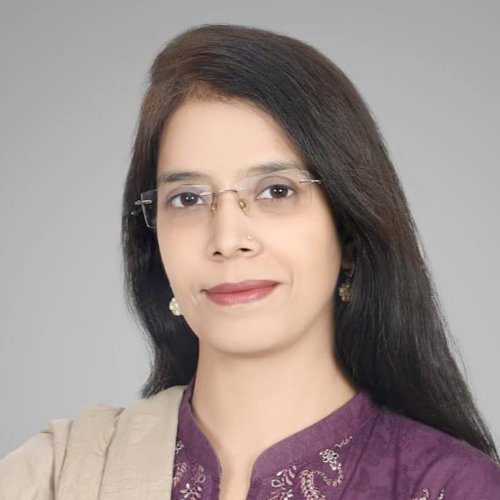
Asma Ahmed
Senior Associate | Inclusion, Training Systems, and Psychosocial Wellbeing
A Consultant Clinical Psychologist and Master Trainer with over twenty years of experience in mental health, neurodevelopmental disorders, professional training, and institutional development. She is Co-Founder of The Gateway for Special Needs, Karachi, a multidisciplinary platform for children with neurodevelopmental needs and their families, and has previously served as Head of Shifaam Wellness Place and as Director Training and Outreach at the Pakistan Centre for Autism, leading nationwide professional development, advocacy, and partnership initiatives. Her consultancy work spans autism unit development, inclusive education, curriculum design, disability advocacy, and clinical service establishment, and she has delivered more than 2,000 training workshops and awareness seminars across Pakistan — work recognized with the 2018 Women's Achievement Award from the Government of Sindh. At Hunar Saaz, she advises on inclusive vocational training design, trainer capacity building and quality assurance, and the psychosocial factors affecting training completion and income sustainability among marginalised youth and women, supporting both the Taxila TVET centre and the organisation's applied research on skills and livelihoods.

Rana Iftikhar Raza
Senior Associate | Data Systems, EMIS, and Digital Governance
A senior data systems and digital governance specialist with over thirty years of experience in Education Management Information Systems (EMIS), GIS-based planning, large-scale surveys, and public sector information systems. He has played a foundational role in the design, digitization, and institutionalization of EMIS and decision-support systems across multiple provinces, with expertise spanning system architecture, spatial data integration, survey operations, third-party validations, and capacity building. At Hunar Saaz, he leads work on data systems, digital transformation, and evidence infrastructure.

Waqar Sherazi
Senior Associate | Policy, Research, and Evaluation
A policy, research, and evaluation specialist with nearly two decades of experience at the intersection of social protection, gender equality, WASH, climate resilience, and institutional reform. He has led complex national and international assignments for governments, multilateral agencies, and development partners across Pakistan, South Asia, the Middle East, and Africa — spanning large-scale programme design, digital censuses and registries, quasi-experimental and mixed-methods evaluations, and national policy reporting including Pakistan's reporting under CEDAW and BPfA+30. At Hunar Saaz, he provides strategic leadership on evidence-informed policy design, evaluation quality, and learning systems.

Urooj Shafi
Associate | Public Sector Finance | Research & Trade
A public sector finance and policy professional with 13+ years of experience spanning trade, market regulation, fair trade enforcement, monitoring & evaluation, and sovereign financial analysis. She has produced sectoral research across engineering, minerals, agriculture, and textiles — analyzing tariff structures, comparative country policy, and macroeconomic indicators — translating that work into briefs that reached senior policymakers directly. Trained in both law (LLB) and finance (MBA), and a U.S. State Department Professional Fellow, she contributes applied research on markets, trade, and public finance at Hunar Saaz.
Hunar Saaz operates through a core leadership team supported by a wider network of senior associates and subject-matter experts — lean, while mobilizing specialized expertise as needed.
Expertise Organized Around Systems and Outcomes
Rather than operating through isolated sectoral silos, our work is organized around thematic areas where policy intent, evidence generation, implementation systems, and institutional incentives converge.
Social Protection, Poverty Reduction, and Inclusion
Design, implementation, and evaluation of social protection systems — cash transfers, targeting systems, beneficiary registries, grievance redress, and adaptive social assistance that responds to poverty, shocks, and displacement.
Gender Equality, Women's Empowerment, and Social Inclusion
Gender-responsive policy design, evaluation, and institutional frameworks aligned with CEDAW, BPfA, and the SDGs — translating normative commitments into measurable outcomes through indicators, data systems, and accountability mechanisms.
Monitoring, Evaluation, and Evidence for Decision-Making
Quasi-experimental and mixed-methods evaluations, theory-based evaluation, impact assessments, and adaptive learning frameworks — M&E systems proportionate to capacity and embedded in planning cycles.
Data Systems, Digital Transformation, and Registries
Large-scale data systems, digital surveys, registries, EMIS, GIS-enabled systems, and real-time monitoring platforms — with data governance, quality assurance, and institutional ownership at the core.
Health, Nutrition, WASH, and Human Development
Programme design, needs assessments, outcome evaluations, and systems strengthening across health, nutrition, and WASH — particularly in fragile, disaster-affected, and underserved areas.
Education, Skills, and Human Capital Development
Sector planning, EMIS, school censuses, education financing, programme monitoring, and institutional reform — with attention to equity, access, and quality in marginalized regions.
Climate Resilience, Disaster Risk, and Fragility
Disaster risk management, post-crisis recovery, climate vulnerability analysis, and resilience-oriented programme design — strengthening preparedness and adaptive capacity across sectors.
Governance, Public Sector Reform, and Institutional Strengthening
Policy coherence, intergovernmental coordination, regulatory reform, organizational design, and embedded capacity strengthening — reforms that are realistic, politically aware, and sustainable.
Grounded in Pakistan, Informed by the Region
Within Pakistan, our leadership has worked across federal, provincial, and local governance systems — with direct experience spanning Punjab, Sindh, Khyber Pakhtunkhwa, Balochistan, Gilgit-Baltistan, and Azad Jammu & Kashmir, in urban, peri-urban, and remote rural contexts, as well as fragile, disaster-affected, and conflict-impacted regions.
Internationally, members of the team have contributed to policy, research, and advisory assignments across South Asia, the Middle East, and Africa — informing our understanding of comparative policy approaches, institutional design, and implementation challenges across different governance environments.
Engagement Snapshots
Selected leadership roles and engagements of Hunar Saaz's founding partners prior to the establishment of the firm.
National Socio-Economic Registry and Digital Poverty Targeting
Led the operational design and nationwide implementation of Pakistan's first end-to-end digital poverty census, covering over 35 million households — survey instruments, digital data architecture, field protocols, and real-time monitoring, laying the foundation for evidence-based targeting and large-scale financial inclusion of women beneficiaries.
CEDAW and Beijing Platform for Action (BPfA+30) National Reporting
National technical leadership for Pakistan's reporting to the United Nations under CEDAW and BPfA+30, with UN Women and the Ministry of Human Rights — gender-responsive indicator frameworks, multistakeholder consultations, and evidence synthesis aligning national commitments with international obligations.
Digital Population and Housing Census (Pakistan)
Technical advisor to the Pakistan Bureau of Statistics for the country's first-ever digital Population and Housing Census — census design, operational planning, GIS-based mapping, logistics, and centralized monitoring supporting real-time decision-making during nationwide rollout.
Post-Conflict Recovery and Cash Transfer Programming (Former FATA)
Design and implementation of large-scale recovery and cash transfer programmes for conflict-affected and displaced populations across seven districts — programme appraisal documents, targeting methodologies, monitoring frameworks, and outcome studies covering health, nutrition, education, livelihoods, and shelter.
Trade Policy, Trade Diplomacy, and Institutional Reform
Senior leadership in trade policy formulation, trade diplomacy, and institutional strengthening within the Ministry of Commerce and the Trade Development Authority of Pakistan — export strategies, impact assessments of trade agreements, and advisory support on investment and commercial policy.
Education Systems Reform and EMIS Development
Design, digitization, and institutionalization of Education Management Information Systems across multiple provinces — school censuses, GIS-based planning tools, third-party validations, and capacity building for evidence-based planning and accountability.
Disaster Risk Management and Post-Disaster Recovery
Leadership in disaster risk reduction, emergency response, and post-disaster recovery across federal and provincial institutions — post-disaster needs assessments, recovery programme evaluations, and risk-informed planning in flood- and earthquake-affected regions.
Governance Reform and Public Sector Institutional Strengthening
Senior leadership roles across federal and provincial governments — Secretary-level and Commissioner positions overseeing policy formulation, institutional reform, intergovernmental coordination, and implementation oversight across social sectors.
Applied Research, Evaluation, and Learning Across Social Sectors
A wide range of applied research, evaluations, and learning engagements across social protection, gender, health, nutrition, WASH, education, disability inclusion, and humanitarian response — mixed-methods approaches translated into policy and programme improvements.
Formal Incorporation and Institutional Status
Hunar Saaz is a legally registered not-for-profit organization in Pakistan, registered under the Societies Registration Act, 1860, with its principal registration in Rawalpindi District, Punjab. The organization is also provisionally registered with the Punjab Charity Commission as a Category A entity, authorizing province-wide operations within Punjab.
Hunar Saaz operates under a formal governance structure, including a General Council and Management Body, ensuring institutional oversight, accountability, and compliance with applicable regulatory requirements — enabling formal engagement with government entities, development partners, multilateral organizations, and civil society actors.